

Real warehouse photos · Class 8 corrosive warehouse · Shanghai / Ningbo loading ports · factory inspection welcome
Glacial Acetic Acid
Product overview
A clear, colourless organic acid with a sharp vinegar odour that freezes just below room temperature — hence the name "glacial". CAS 64-19-7 · EC 200-580-7 · CH3COOH.
What it is used for
Glacial acetic acid is the pure, water-free form of acetic acid with a purity of 99.8% min, a melting point of 16.6 °C and a density of 1.049 g/cm³. Below 16 °C it crystallises into ice-like crystals, which is where the "glacial" name comes from — in cold seasons we advise on heated or insulated storage so the product stays liquid and easy to pump.
It is one of the most widely used feedstocks in the chemical industry: the base raw material for acetate esters (ethyl acetate, butyl acetate) and vinyl acetate monomer (VAM), a fixative and dyeing assistant in textile printing, and a pH regulator in food and pharmaceutical production when the food-grade (E260) or pharmacopoeia grade is specified.
We stock industrial grade 99.8% min as the standard offering, and can quote food grade E260 on request. Every batch ships with a COA covering assay, water content, formic acid and heavy metals, packed under UN 2789, class 8 (corrosive), packing group II.
Acetate esters & VAM
Core feedstock for ethyl acetate, butyl acetate and vinyl acetate monomer.
Textile & dyeing
Dyeing assistant and pH control in printing and finishing mills.
Food & pharma
Food-grade E260 acidity regulator and pharmacopoeia-grade solvent on request.
Need industrial or food grade GAA?
Tell us the grade and quantity — pricing and the batch COA back the same working day.
Specifications
Typical values from our standard production lot. Customer-specific limits can be agreed in the contract and confirmed on the batch COA.
Full COA & SDS available free
Leave your email — documents arrive with the quotation, no back-and-forth.
Packing & loading
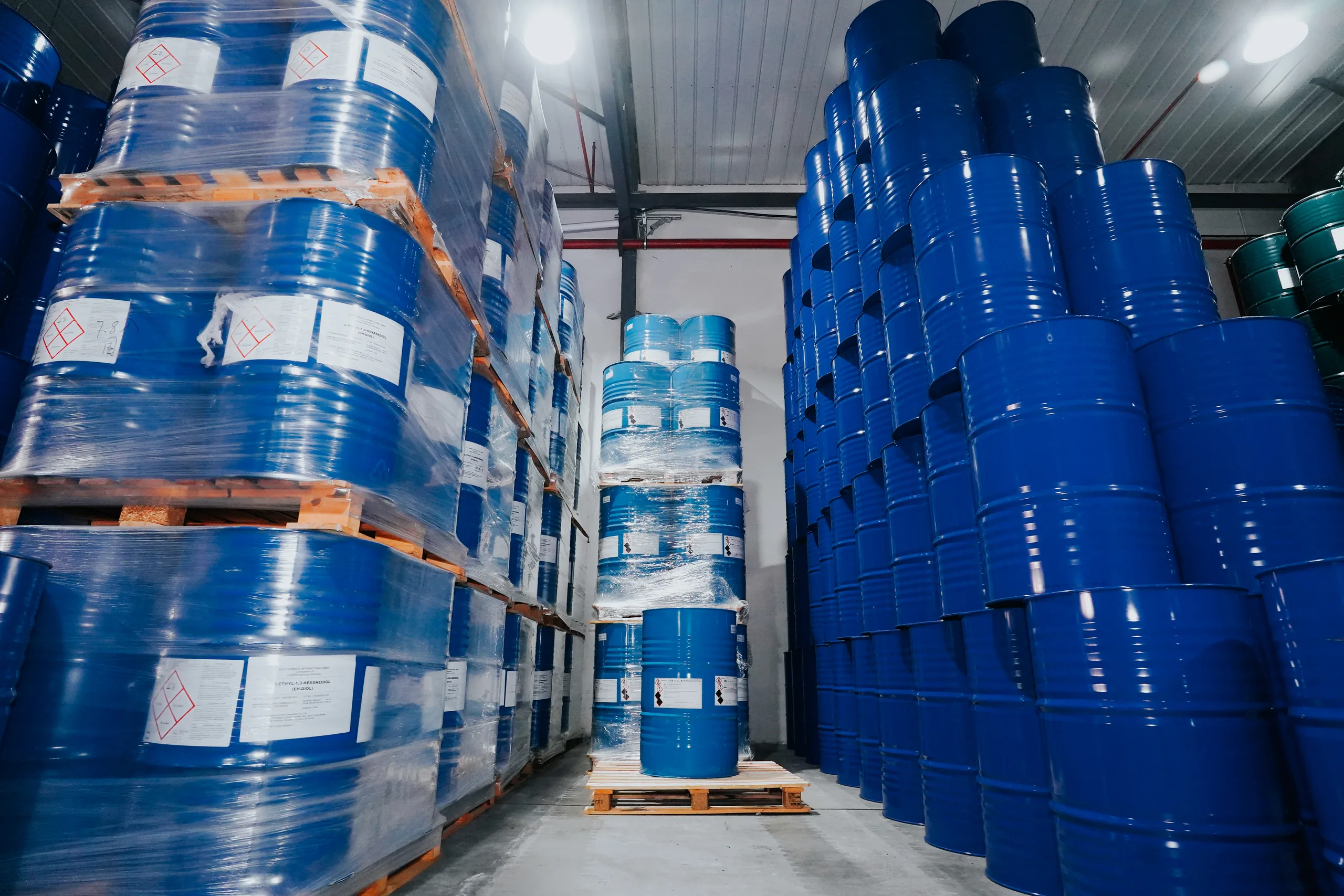
Glacial acetic acid is UN 2789 class 8 corrosive, so packing, labelling and container stowage all follow the DG declaration. Drums and IBCs are palletised, wrapped and labelled at our warehouse — we photograph the pallet before it goes into the container.
Frequently asked questions
Short answers to the questions buyers ask us most often before placing the first order.
Does glacial acetic acid freeze in winter?
Yes — it crystallises below 16.6 °C. For cold-season shipments we advise drum packing with insulated containers, or heated discharge at destination. Tell us your destination climate and we plan the packing accordingly.
Can you supply food grade (E260) glacial acetic acid?
Yes. Food grade is produced and packed on a separate line with heavy-metal limits per food-additive specifications. Tell us at enquiry stage so the correct lot is reserved, and the COA will show the food-grade parameters.
What is the difference between glacial and ordinary acetic acid?
"Glacial" means water-free: 99.8% min assay. Ordinary acetic acid is a diluted solution (typically 30–80%). Buyers use glacial grade as a raw material for esters and VAM, where the water content must be controlled.
How long does shipping take?
Stock lots leave in 5–10 days after deposit. Vessel transit then depends on the destination port; we quote the earliest sailing date with the price, not after you order.
Do you offer mixed containers with other solvents?
Class 8 and class 3 goods can be consolidated under one DG declaration within segregation rules — GAA with ethyl acetate or IPA in one 20' container is common for us. We confirm the DG plan before booking.
Still have a question?
One message to our sales team — you will get a real answer, not a form letter.
Don't miss this shipment window
Industrial 99.8% min and food grade are both loading for the next vessel from Shanghai / Ningbo — lock your price before it sails.